Industrial Rubber
Material Guide

Explore our complete range of industrial rubber and engineering materials designed to deliver exceptional performance across demanding industrial applications.

Why It Matters

Choosing the Right Material
is Everything

Choosing the correct material is essential for ensuring long service life, reliable sealing performance, chemical compatibility, temperature resistance, and overall equipment efficiency.
Application-Specific Performance
Operating conditions like pressure, temperature, chemicals, oils, fuels, water, and steam determine the ideal material grade.
Maximised Equipment Uptime
The right material minimises maintenance costs, prevents premature failures, and extends the operational life of your equipment.
Expert Technical Guidance
Our team helps customers select the most suitable material to maximise product performance based on your exact specifications.
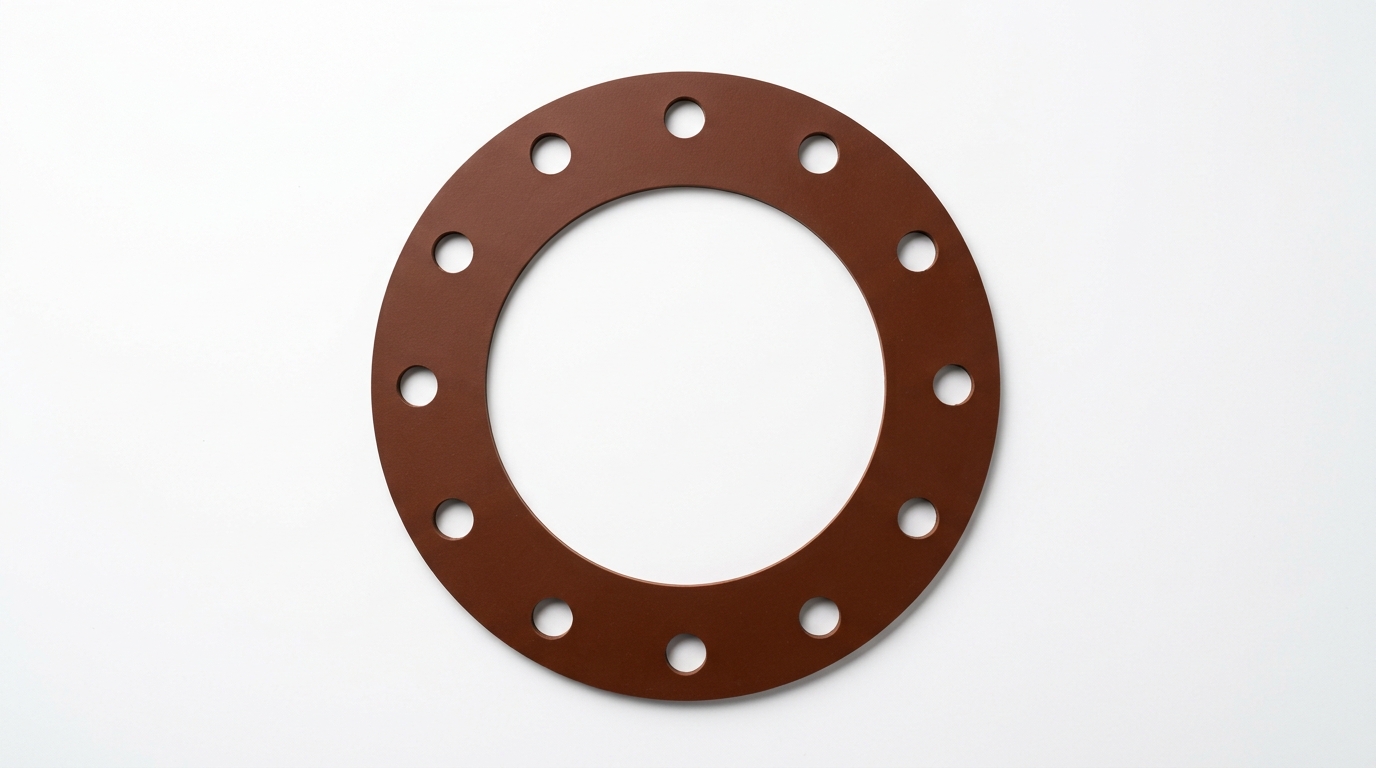
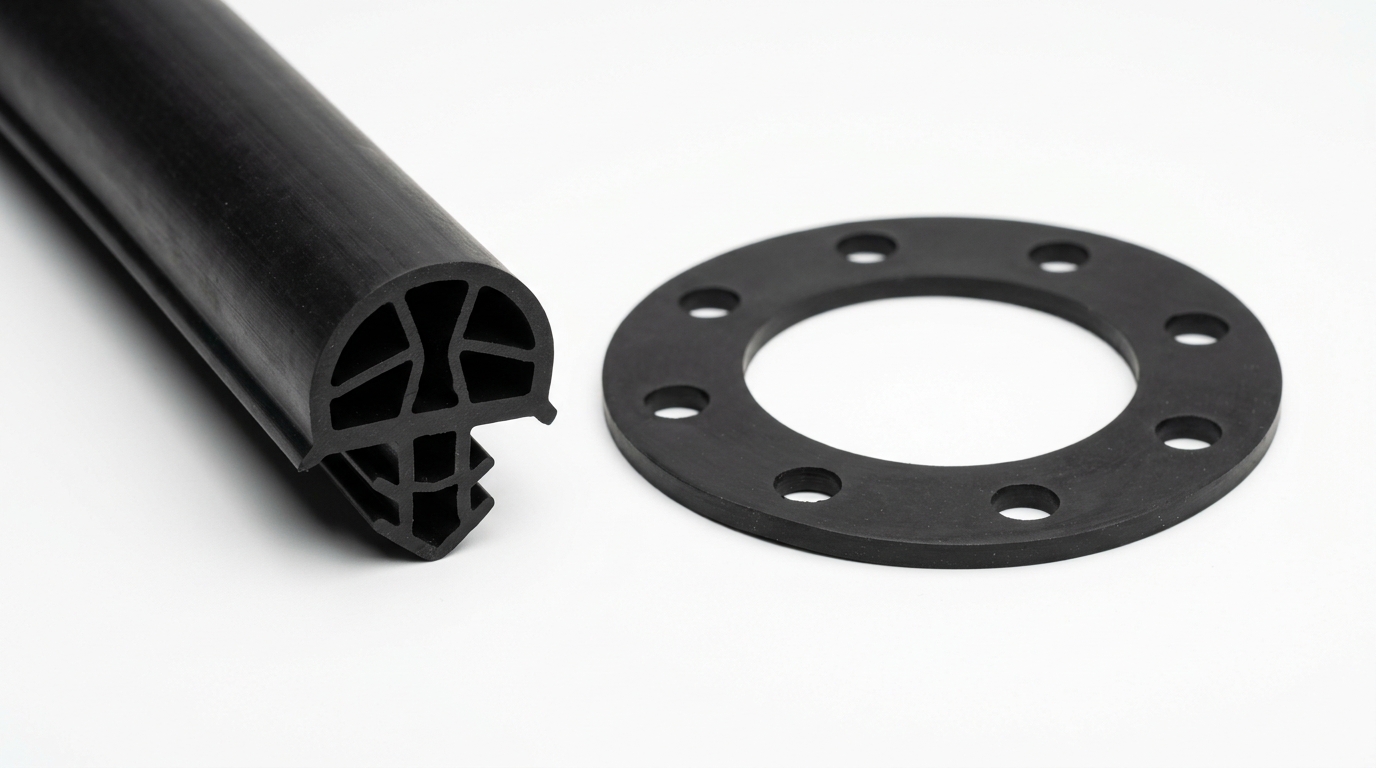
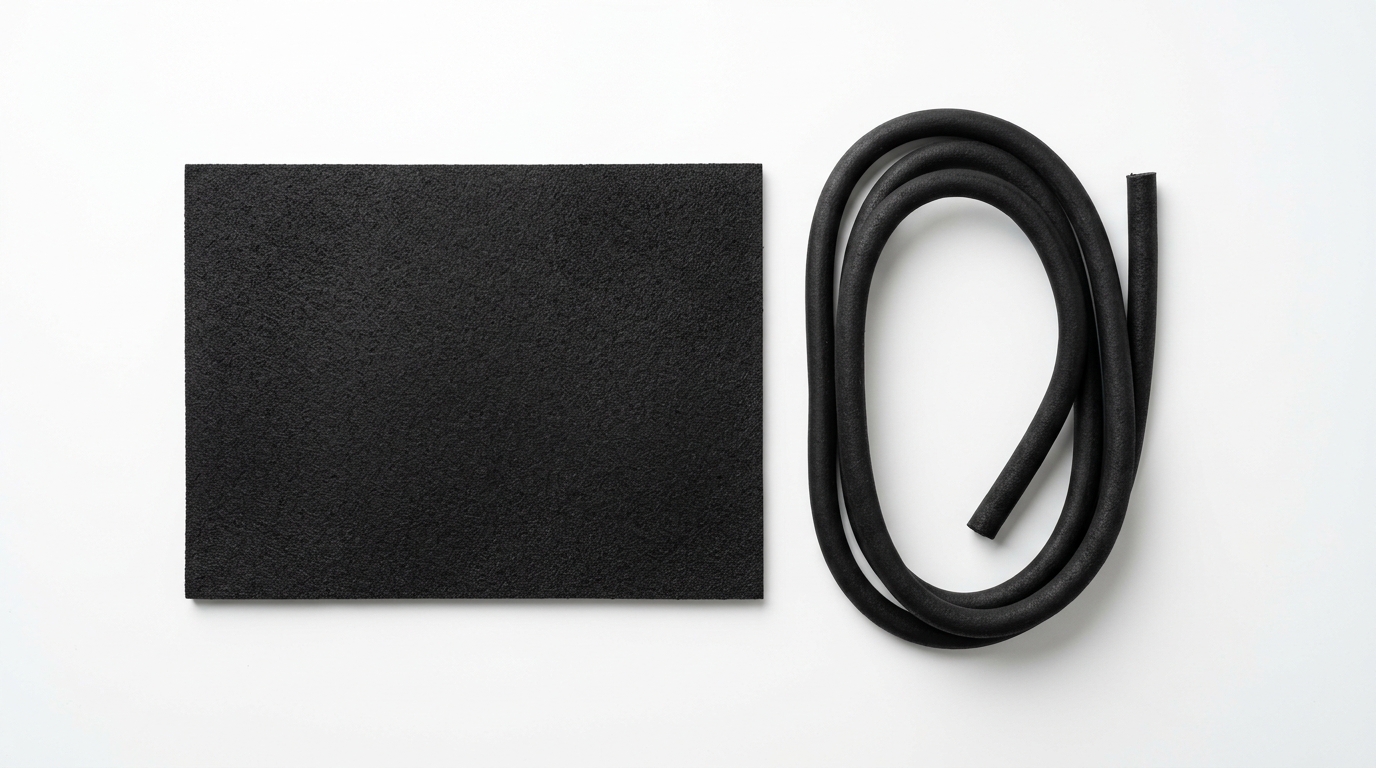
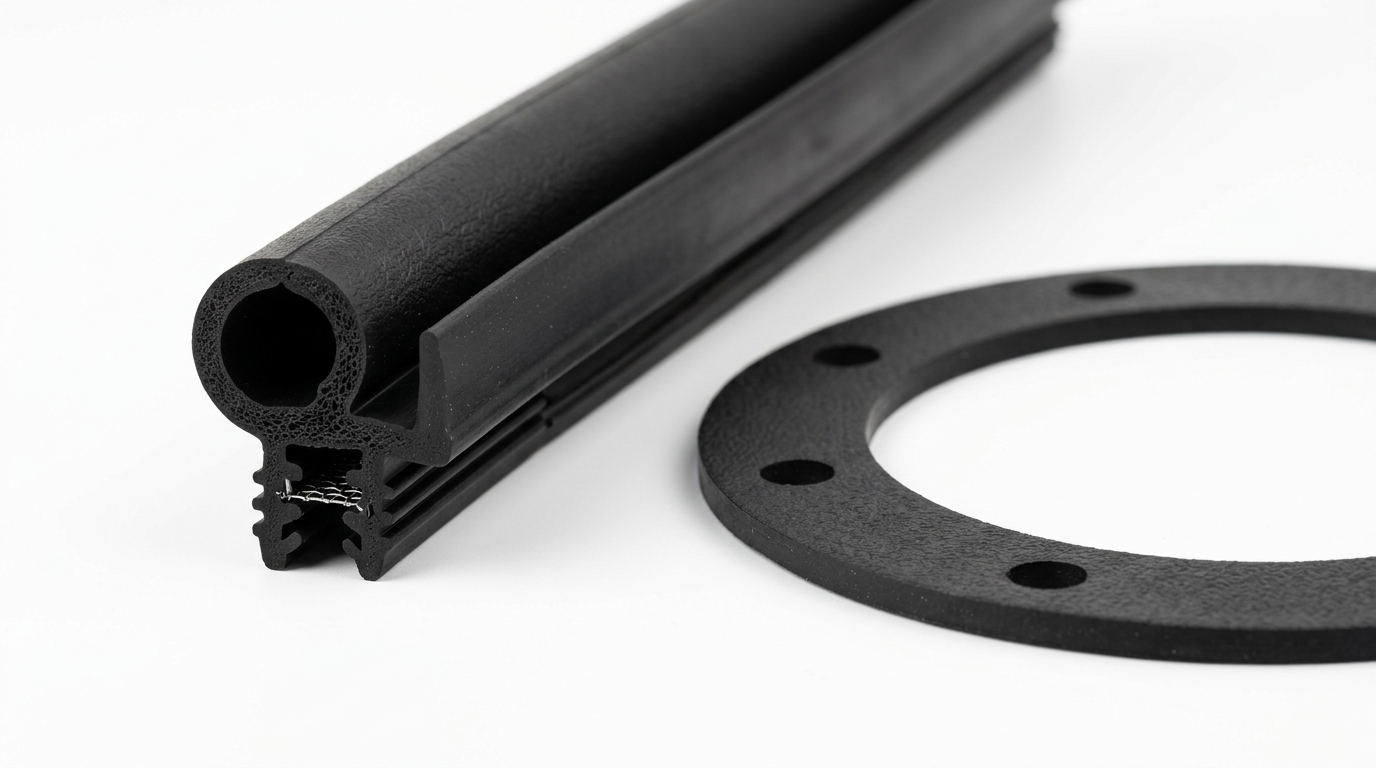
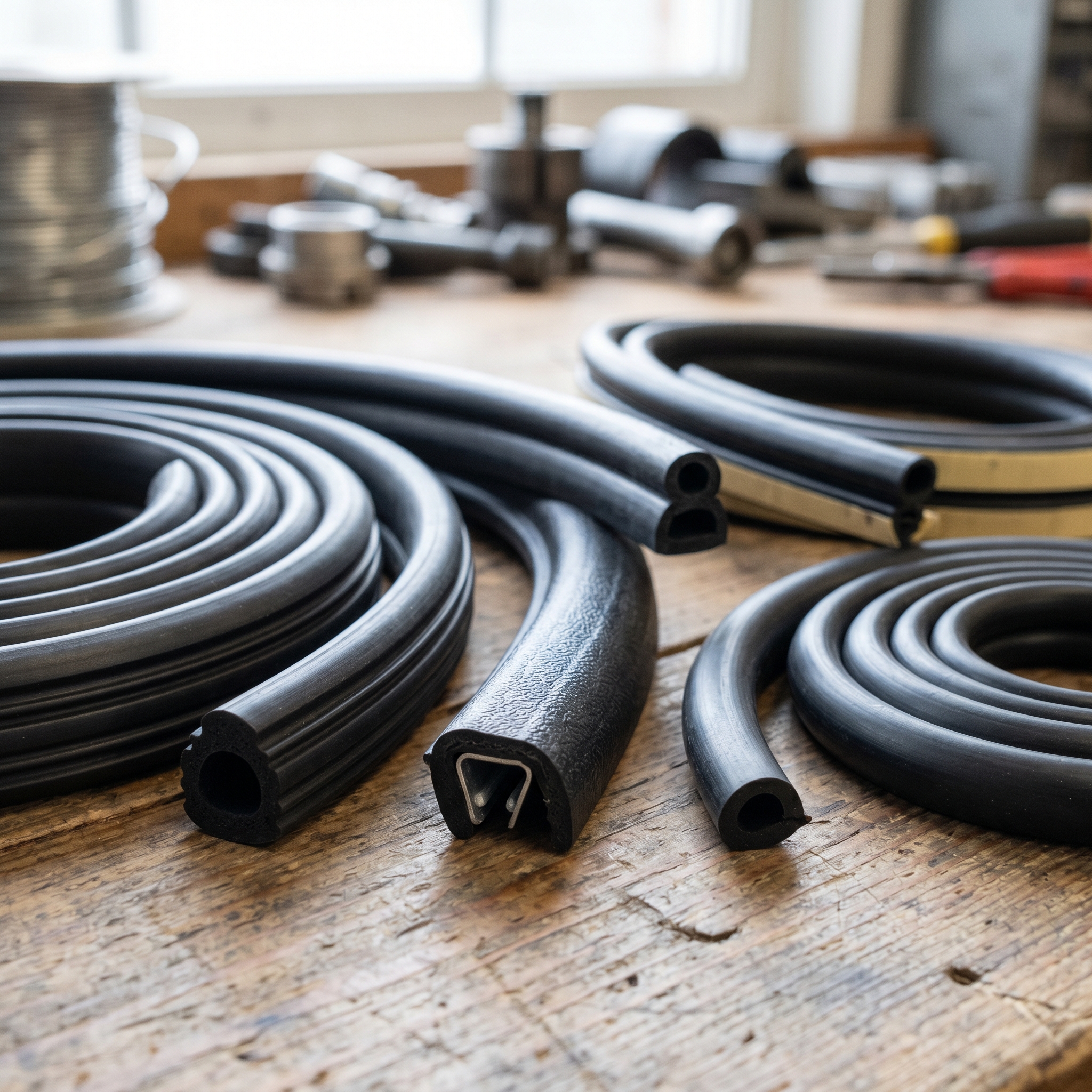
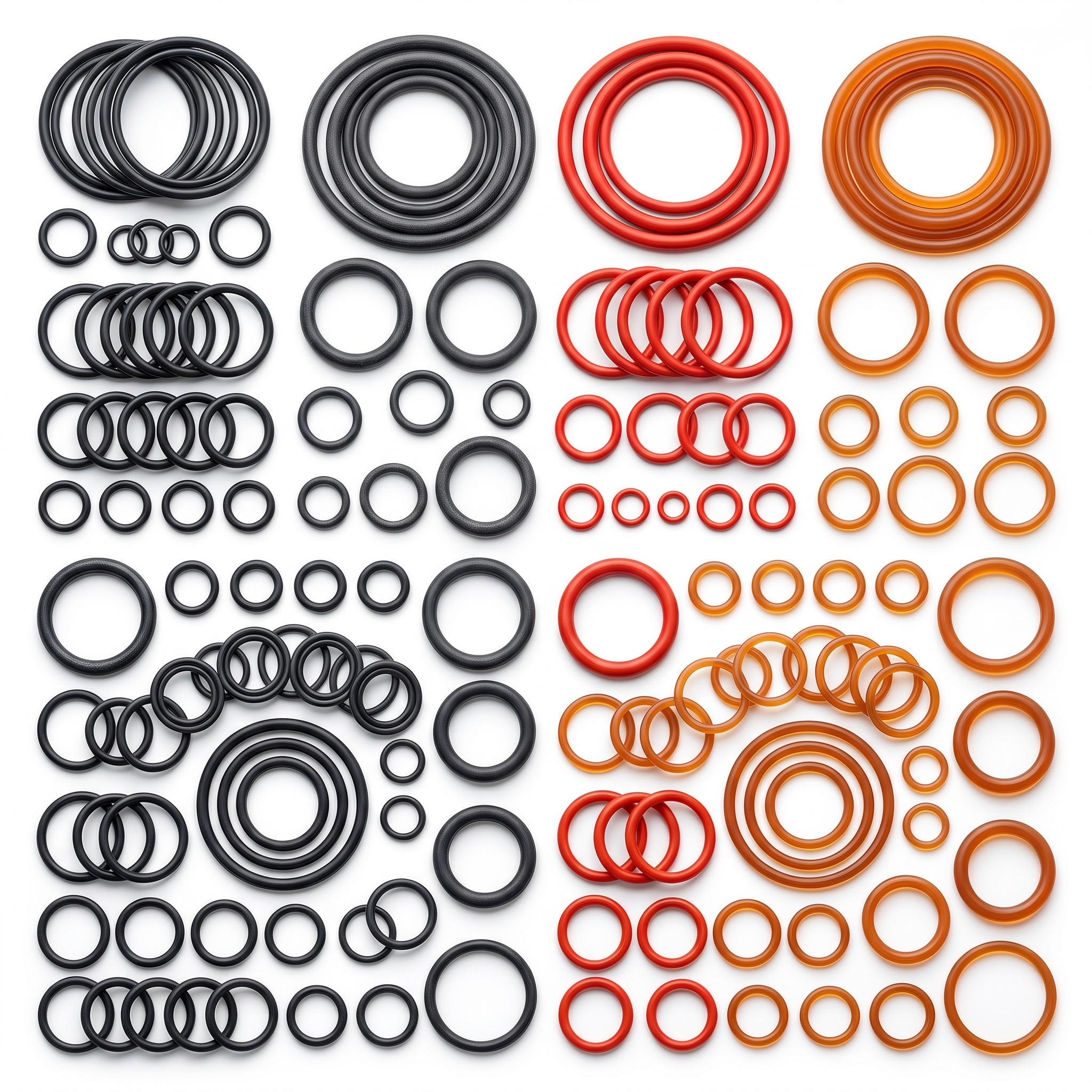
Assorted industrial rubber materials comparison
8+
Material Grades Available
Most Popular

Nitrile Rubber (NBR)

Also known as Buna-N

Temperature Range: −40°C to +120°C

One of the most widely used synthetic rubber materials for industrial sealing applications. NBR provides excellent resistance to petroleum-based oils, fuels, hydraulic fluids, and grease while maintaining excellent mechanical strength at a cost-effective price point.

Excellent Oil Resistance Fuel Resistant Good Mechanical Strength High Wear Resistance Cost Effective
Applications
  • Hydraulic Systems
  • Automotive Industry
  • Oil & Gas
  • Industrial Machinery
  • Pumps & Valves
  • Compressors
Products Available
  • O-Rings
  • Oil Seals
  • Hydraulic Seals
  • Rubber Sheets
  • Rubber Cords
  • Gaskets
Common Questions
Is NBR suitable for diesel?+
Yes. NBR has excellent resistance to diesel fuel, petroleum oils, and most hydrocarbon-based fluids, making it one of the top choices for fuel system sealing applications.
Can NBR be used outdoors?+
NBR has limited resistance to ozone, UV, and weathering. For outdoor applications with sun or ozone exposure, EPDM or Neoprene is recommended instead.
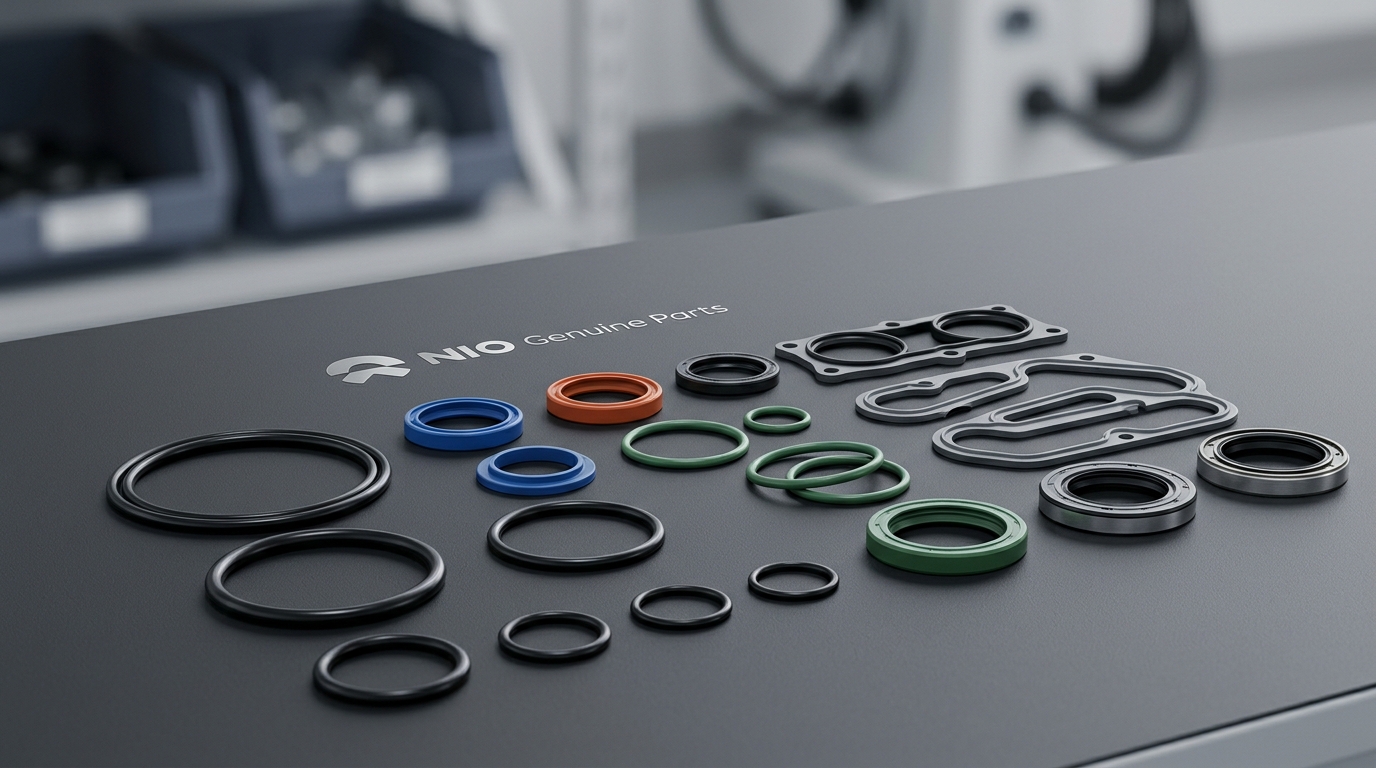
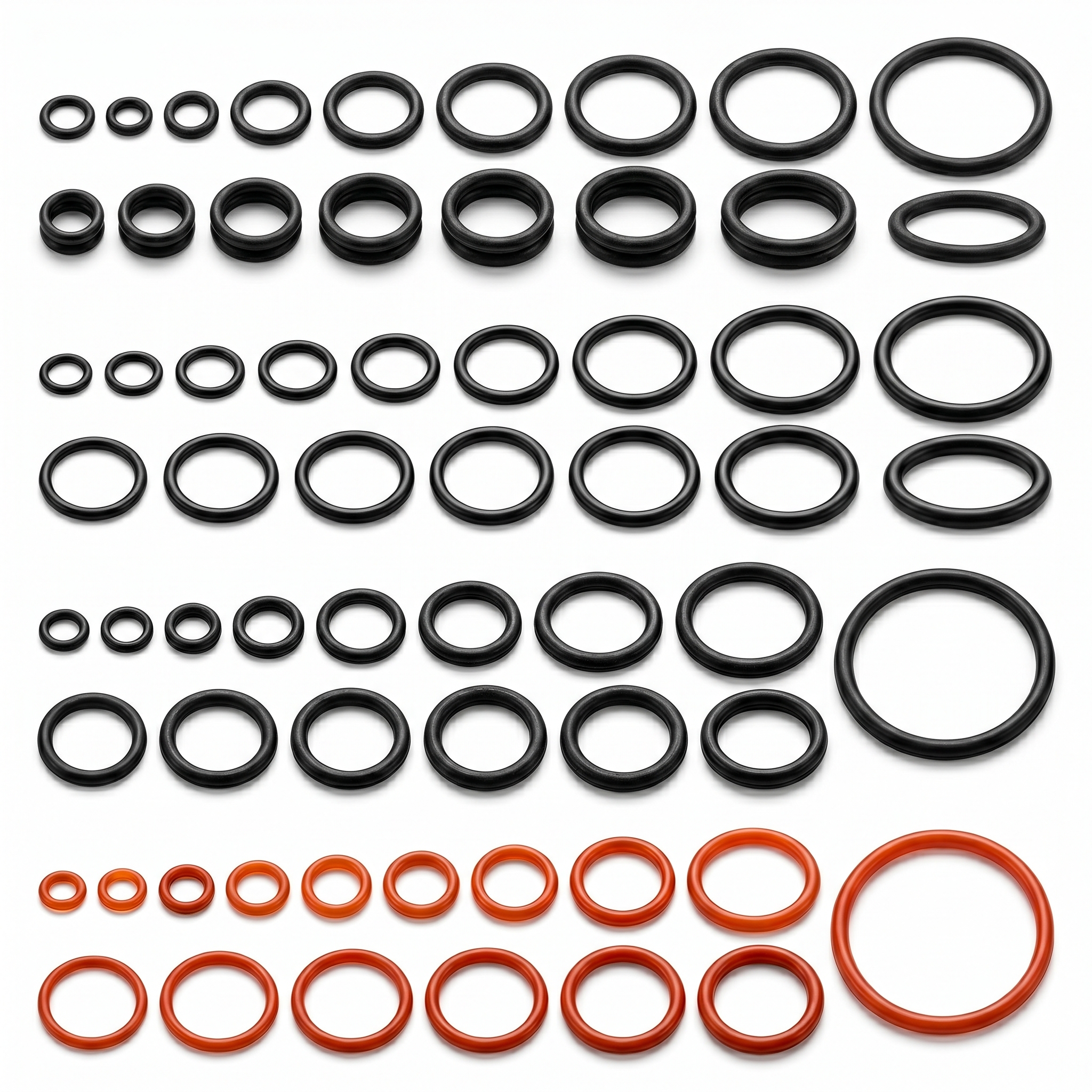
NBR O-Rings and Hydraulic Seals
Nitrile Black
NBR Hydraulic Seals
NBR Oil Seals
Food & Medical Grade

Silicone Rubber

Food Grade · Medical Grade · High Temperature

Temperature Range: −60°C to +230°C

Silicone rubber is a high-performance elastomer known for its outstanding temperature resistance, flexibility over a wide range, and food-grade safety. It remains pliable at very low temperatures and retains properties at high temperatures where most other rubbers fail.

Extreme Temperature Range FDA Food-Grade Available Excellent Flexibility Electrical Insulation Non-Toxic
Applications
  • Food Processing
  • Medical Devices
  • Electrical Equipment
  • Laboratory Equipment
  • Aerospace
Products Available
  • O-Rings
  • Rubber Sheets
  • Gaskets
  • Tubing
  • Rubber Cords
Common Questions
Is Silicone really food-grade safe?+
Our food-grade silicone complies with FDA standards and is safe for direct food contact. It is non-toxic, odourless, and tasteless, making it ideal for food and beverage processing equipment.
Does Silicone resist oils and solvents?+
Silicone has moderate oil resistance only. For petroleum oils and fuels, NBR or Viton is a better choice. Silicone excels in temperature extremes and FDA applications, not in oil-immersed environments.
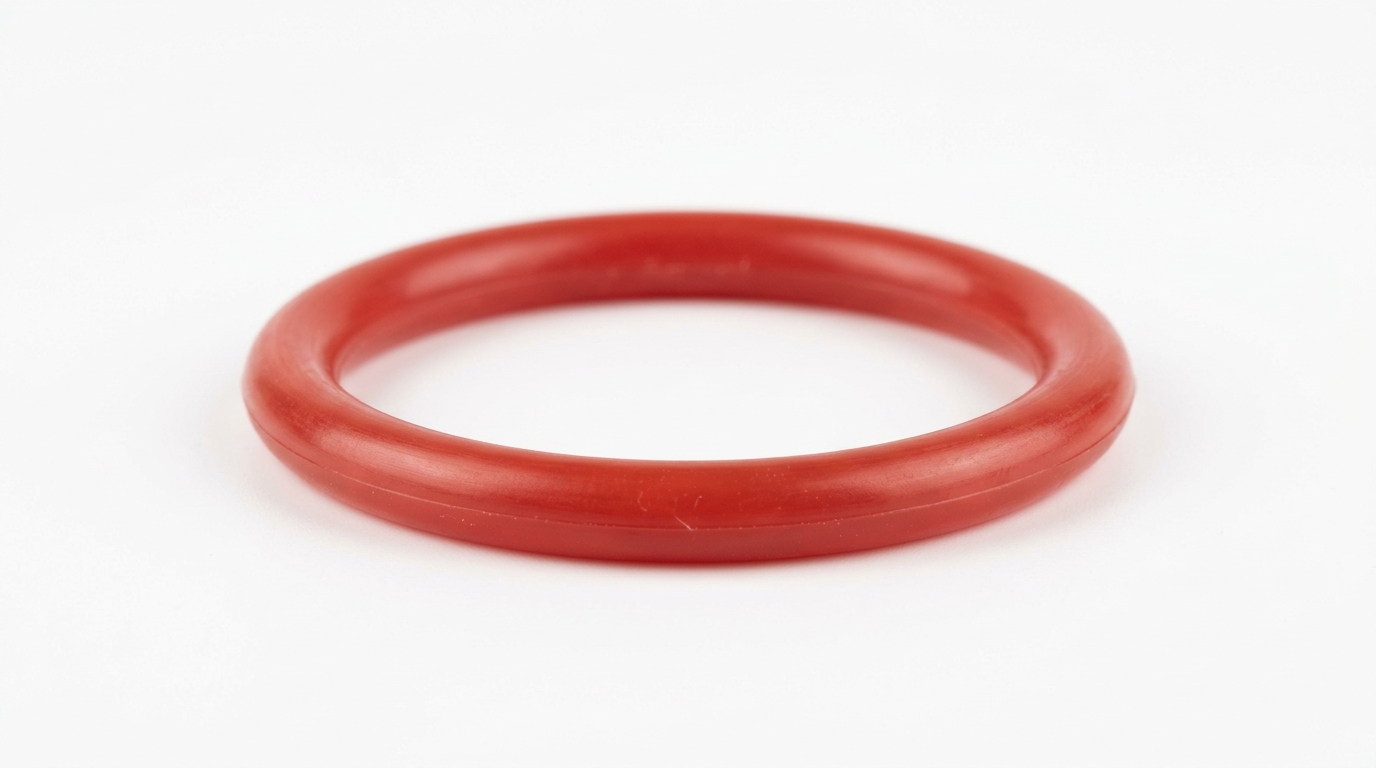
Silicone O-Rings
Silicone Red / Translucent
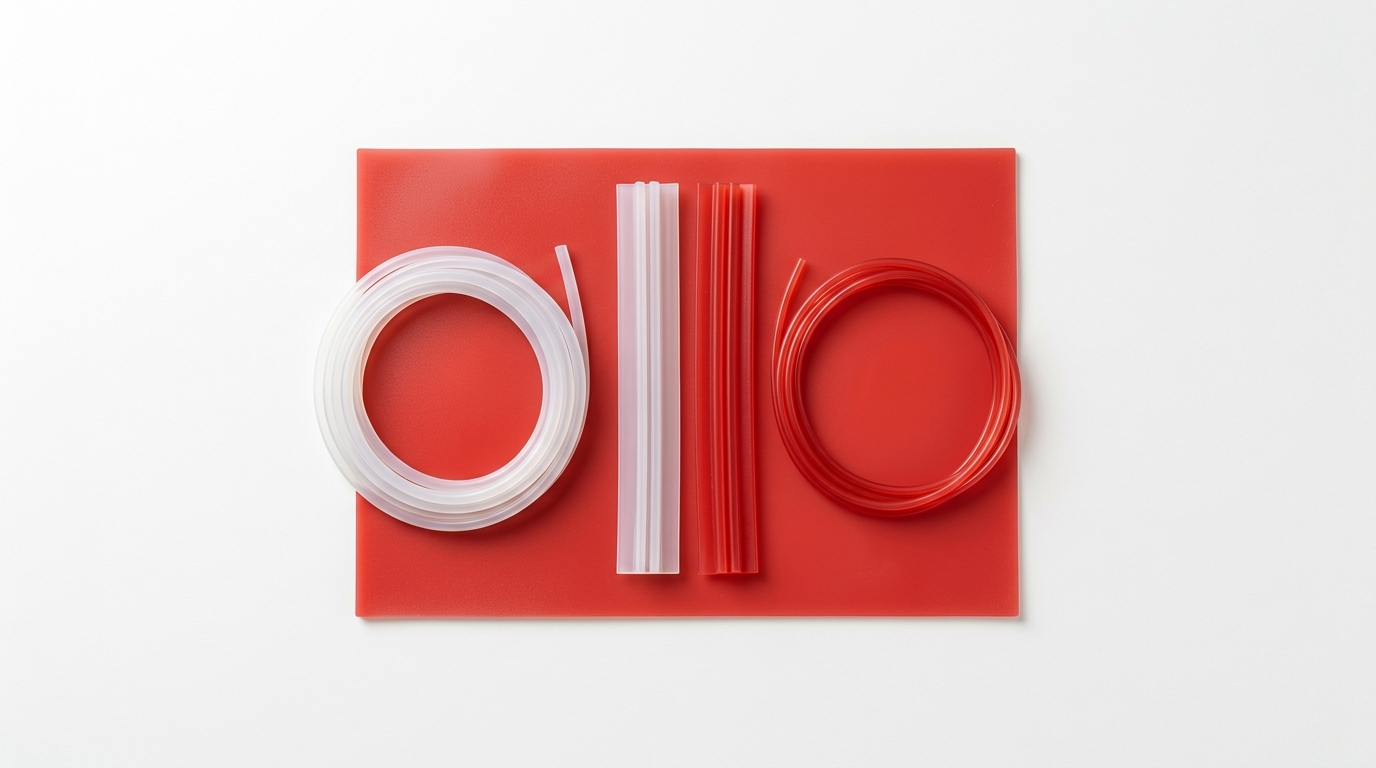
Silicone Sheets and Cords
Silicone Beading
Premium Grade

Viton® (FKM)

Fluoroelastomer — Superior Chemical & Heat Resistance

Temperature Range: −20°C to +250°C

Viton (FKM) is the premium choice where extreme heat and aggressive chemicals are present. Its fluorocarbon backbone provides unmatched resistance to a broad range of chemicals, acids, fuels, and high temperatures that would rapidly degrade other elastomers.

Excellent Chemical Resistance Excellent Heat Resistance Fuel & Oil Resistant Low Compression Set Long Service Life
Applications
  • Chemical Plants
  • Petroleum Refining
  • Automotive (High Heat)
  • Aerospace
  • Semiconductor
Products Available
  • O-Rings
  • Oil Seals
  • Gaskets
  • Hydraulic Seals
  • Custom Profiles
Common Questions
What is the difference between NBR and Viton?+
NBR is cost-effective and excellent for petroleum oils at moderate temperatures. Viton handles much higher temperatures (up to 250°C) and a far wider range of aggressive chemicals, making it the preferred choice for demanding industrial and chemical environments, albeit at a higher cost.
Can Viton handle ketones and esters?+
Standard Viton has poor resistance to ketones and low molecular weight esters. Specialised FKM grades (e.g., GFLT) offer improved resistance. Please contact our technical team for guidance on specific chemical compatibility.
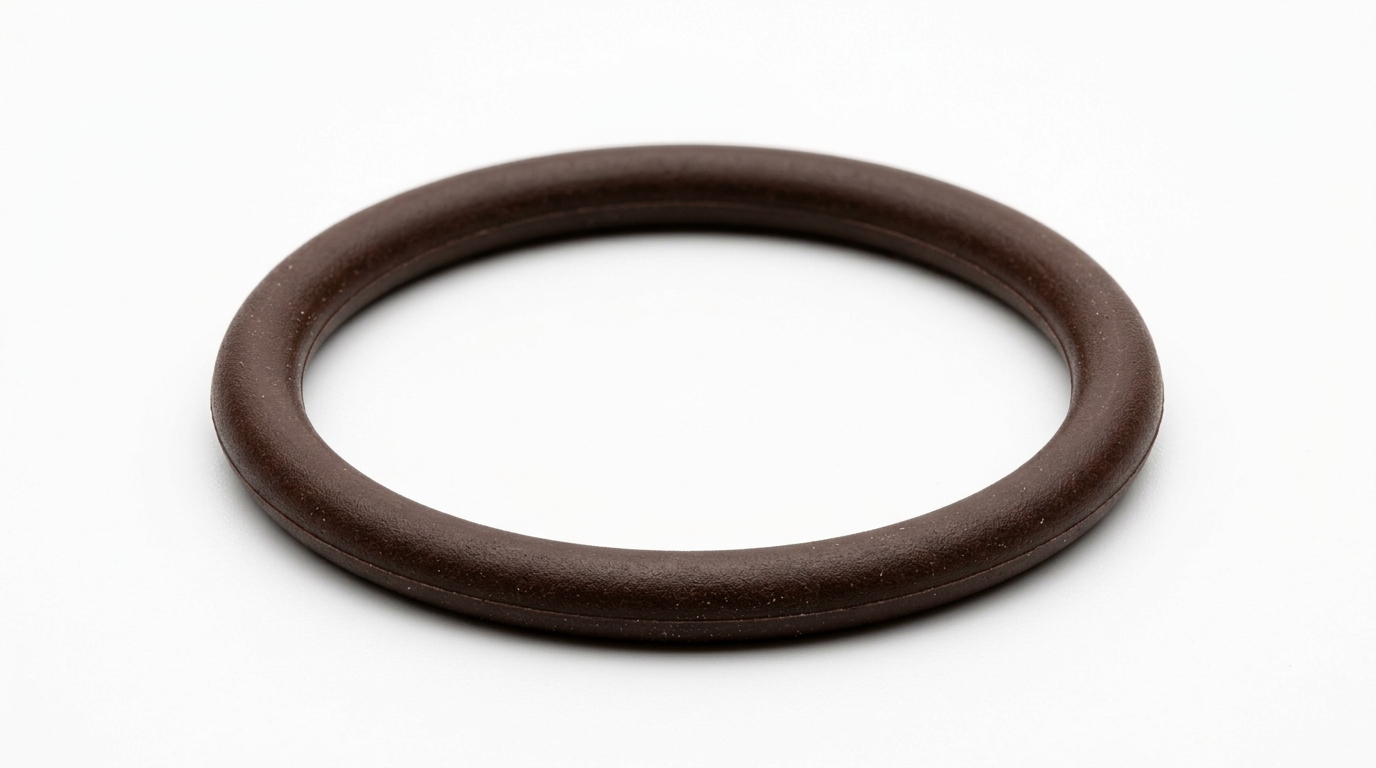
Viton FKM O-Rings
Viton Brown / Black
Viton Gaskets
Viton Seals
Weather & Water Resistant

EPDM Rubber

Ethylene Propylene Diene Monomer

Temperature Range: −50°C to +150°C

EPDM is the benchmark material for outdoor, steam, and water applications. Its outstanding resistance to UV, ozone, and weathering, combined with excellent water and steam resistance, makes it the first choice for construction, water treatment, and outdoor equipment.

Excellent Weather Resistance Steam Resistant Water & UV Resistant Ozone Resistant Food Grade Available
Applications
  • Outdoor Equipment
  • Water Treatment Plants
  • Construction Sealing
  • Automotive Weather Strips
  • Steam Systems
Products Available
  • Gaskets
  • Rubber Sheets
  • O-Rings
  • Rubber Cords
  • Beading Profiles
Common Questions
Is EPDM suitable for drinking water applications?+
Yes. EPDM is widely used in potable water systems due to its non-toxic nature, excellent water resistance, and compliance with WRAS and NSF standards. Confirm food-grade specification when ordering.
Can EPDM be used with petroleum oils?+
No. EPDM has very poor resistance to petroleum-based oils, fuels, and mineral oils. For oil environments, choose NBR or Viton instead.
EPDM Rubber Seals and Gaskets
EPDM Black
EPDM Sheets and Cords
EPDM Gaskets
Marine & General Purpose

Neoprene

Polychloroprene — Versatile General-Purpose Rubber

Neoprene (polychloroprene) is a versatile synthetic rubber offering a good balance of properties. It provides good weather, ozone, and moderate oil resistance, making it popular for marine applications, construction gaskets, and general-purpose sealing where a single material needs to perform across multiple conditions.

Good Weather Resistance Moderate Oil Resistance Flame Retardant Marine Applications Good Flexibility
Applications
  • Marine Equipment
  • Construction
  • HVAC Systems
  • Cable Jacketing
  • General Industrial
Products Available
  • Rubber Sheets
  • Gaskets
  • Beading Profiles
  • Rubber Cords
  • Custom Moulded Parts
Common Questions
Is Neoprene good for marine environments?+
Yes. Neoprene is widely used in marine applications because of its resistance to seawater, ozone, and mild oils. It performs well in outdoor environments exposed to the elements.
How does Neoprene compare to EPDM?+
EPDM outperforms Neoprene in water and steam resistance, while Neoprene offers better moderate oil resistance and flame retardancy. The choice depends on whether oil contact or pure water/steam resistance is the priority.
Neoprene Rubber Products
Neoprene Black
Neoprene Sheets
Rubber Beading
High Elasticity

Natural Rubber

NR — Outstanding Abrasion & Impact Resistance

Natural rubber (NR) is derived from rubber trees and offers some of the highest elasticity and abrasion resistance available in any rubber material. It is the preferred material for heavy-duty applications involving impact absorption, conveyor systems, and mining equipment where mechanical strength and resilience are paramount.

Excellent Elasticity High Abrasion Resistance Good Impact Absorption High Tensile Strength Cost Efficient
Applications
  • Mining Equipment
  • Conveyor Systems
  • Anti-Vibration Mounts
  • Floor Matting
  • Heavy Engineering
Products Available
  • Rubber Sheets
  • Rubber Pads
  • Gaskets
  • Anti-Vibration Mounts
  • Floor Mats
Common Questions
Is Natural Rubber suitable for outdoor use?+
Natural rubber has poor resistance to ozone, UV, and weathering. For outdoor applications, EPDM or Neoprene is a better alternative. NR is best used indoors or in covered industrial environments.
Can Natural Rubber handle oil or fuel contact?+
No. Natural rubber swells significantly when in contact with petroleum oils and fuels. For oil-exposed applications, NBR or Viton should be selected.
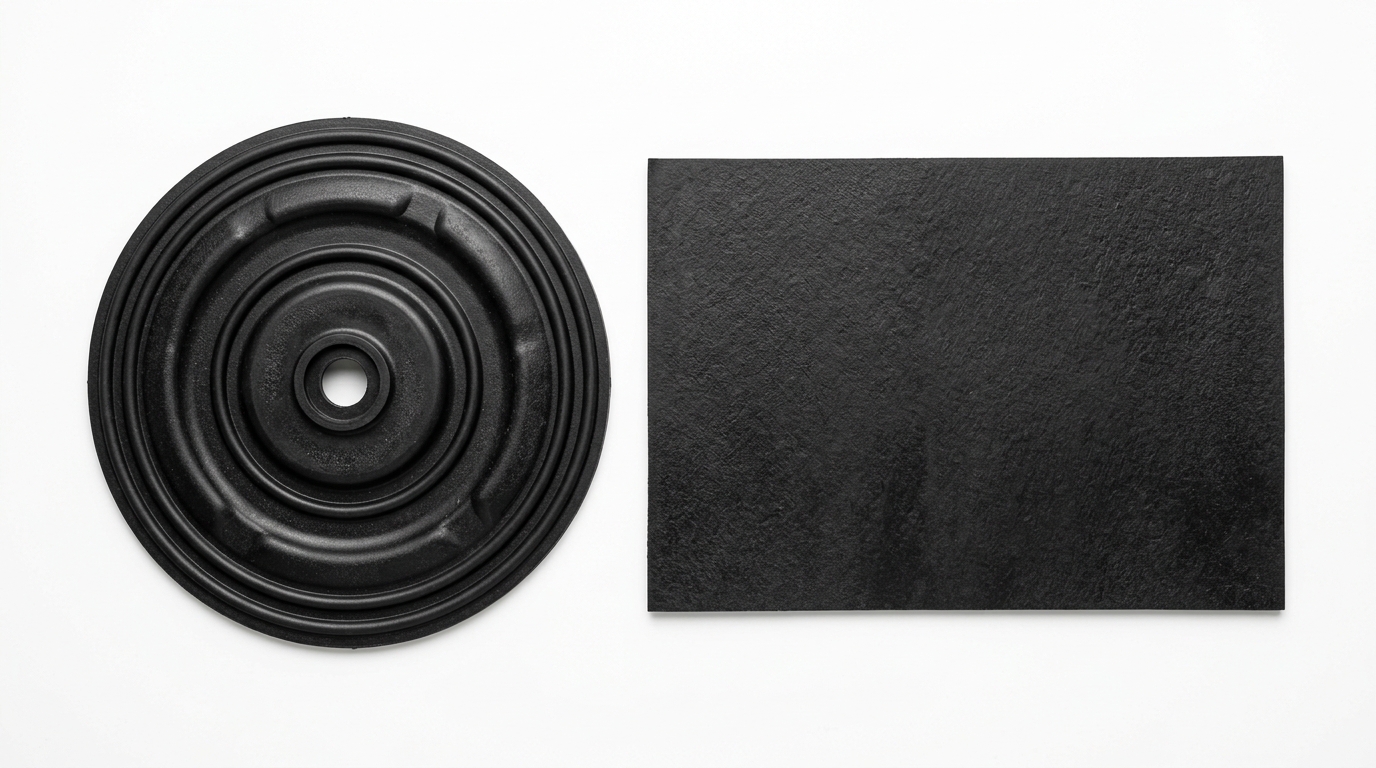
Natural Rubber Sheets
Natural / Black
Rubber Diaphragms
Rubber Pads
Maximum Wear Resistance

Polyurethane (PU)

Exceptional Wear Resistance & Load Capacity

Polyurethane bridges the gap between rubber and plastics, combining the elasticity of rubber with the toughness of plastic. It delivers exceptional abrasion and wear resistance — far superior to most rubbers — along with high load-bearing capacity, making it indispensable for demanding wear-part applications.

Exceptional Wear Resistance High Load Capacity Tear Resistant Good Oil Resistance Excellent Compression Set
Applications
  • Industrial Rollers
  • Bushes & Bearings
  • Wear Parts & Liners
  • Hydraulic Seals
  • Mining Equipment
Products Available
  • PU Rods
  • PU Sheets
  • PU Bushes
  • PU Seals
  • Custom Wear Parts
Common Questions
Is PU better than rubber for wear parts?+
Yes, in most wear applications. Polyurethane can offer 5–10× the abrasion resistance of natural rubber, making it the preferred material for chute liners, rollers, scraper blades, and other high-wear contact parts.
Can PU be used in hydraulic systems?+
Yes. PU hydraulic seals are widely used in cylinders and piston applications due to their excellent pressure resistance, low friction, and wear resistance in hydraulic media.
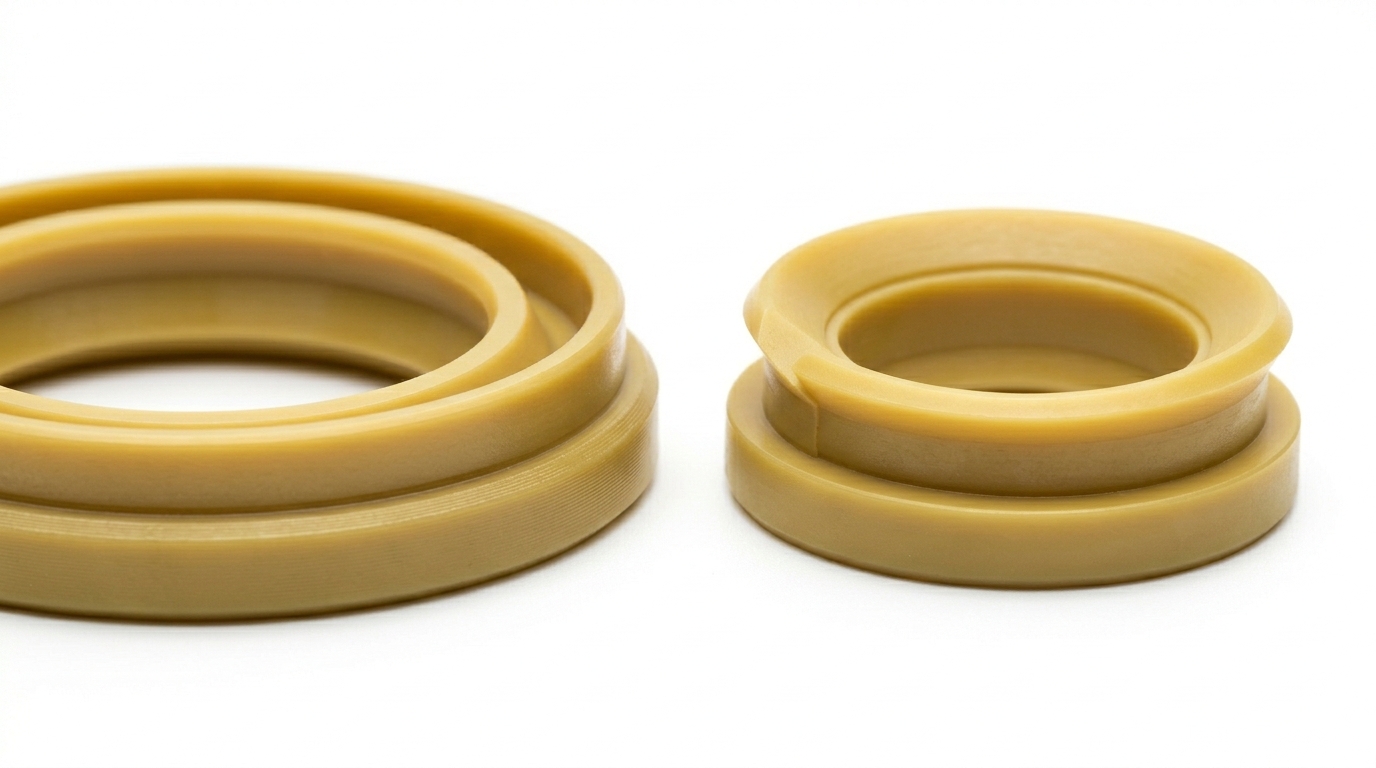
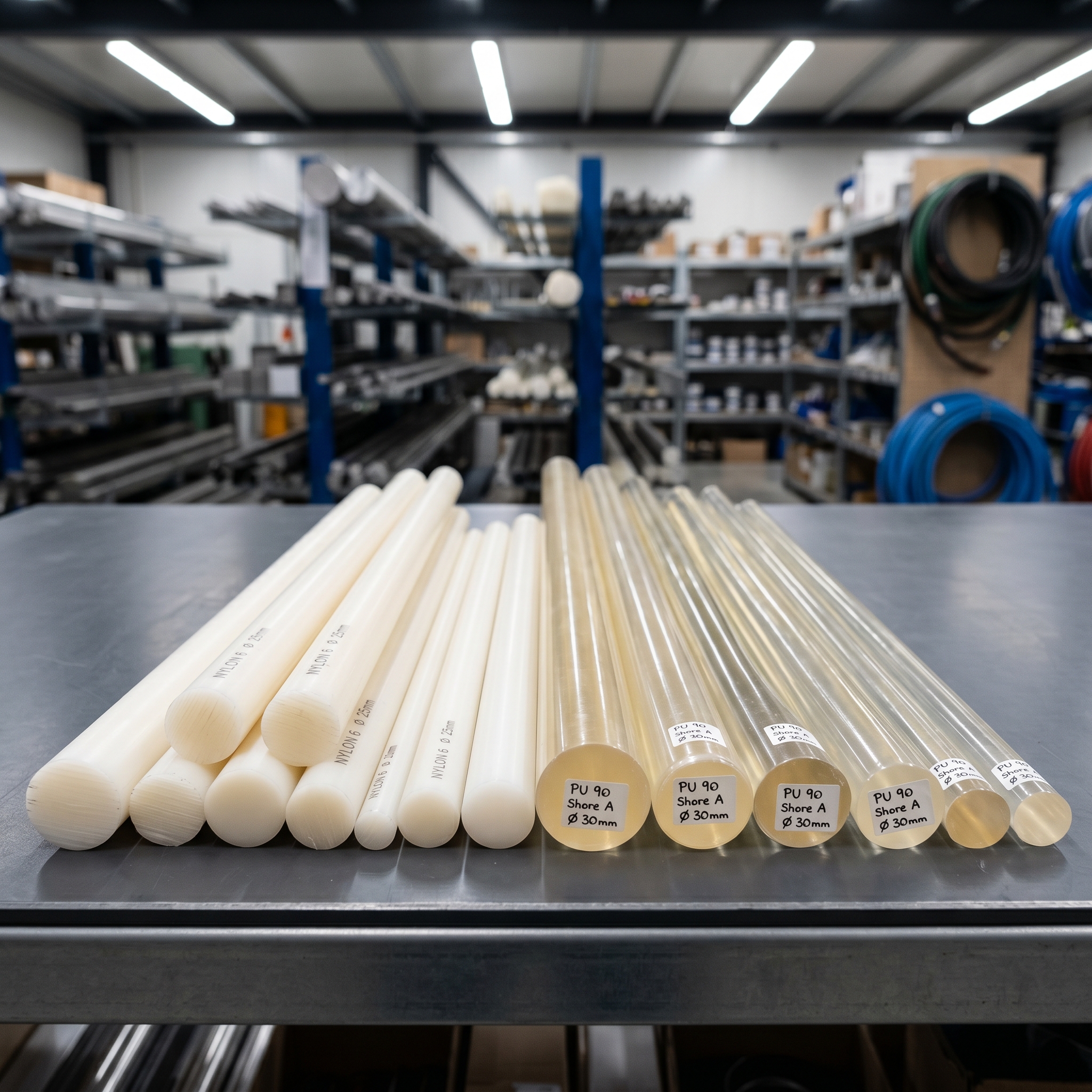
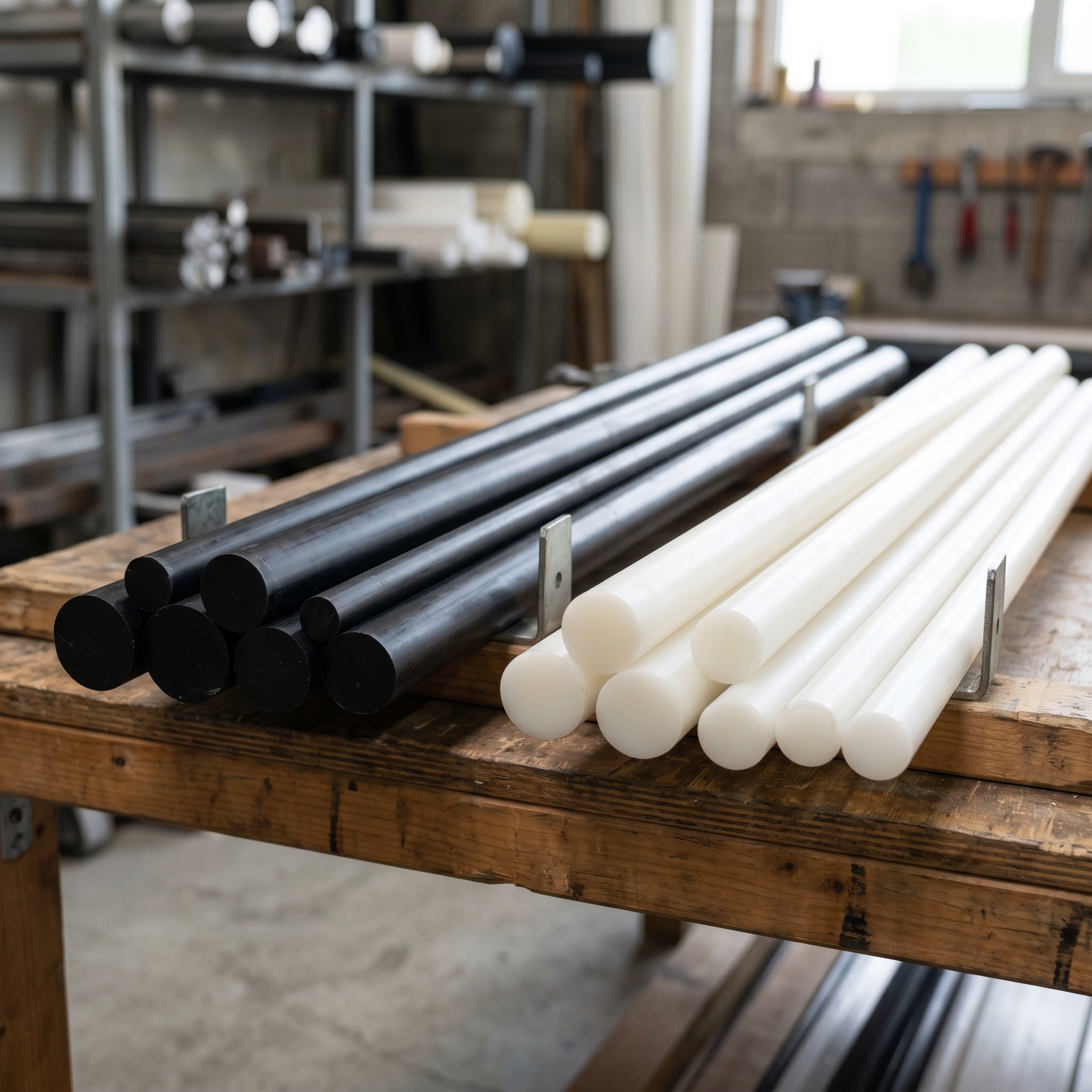
Polyurethane Rods and Components
PU Yellow / Amber
PU Products
PU Sheets
Universal Chemical Resistance

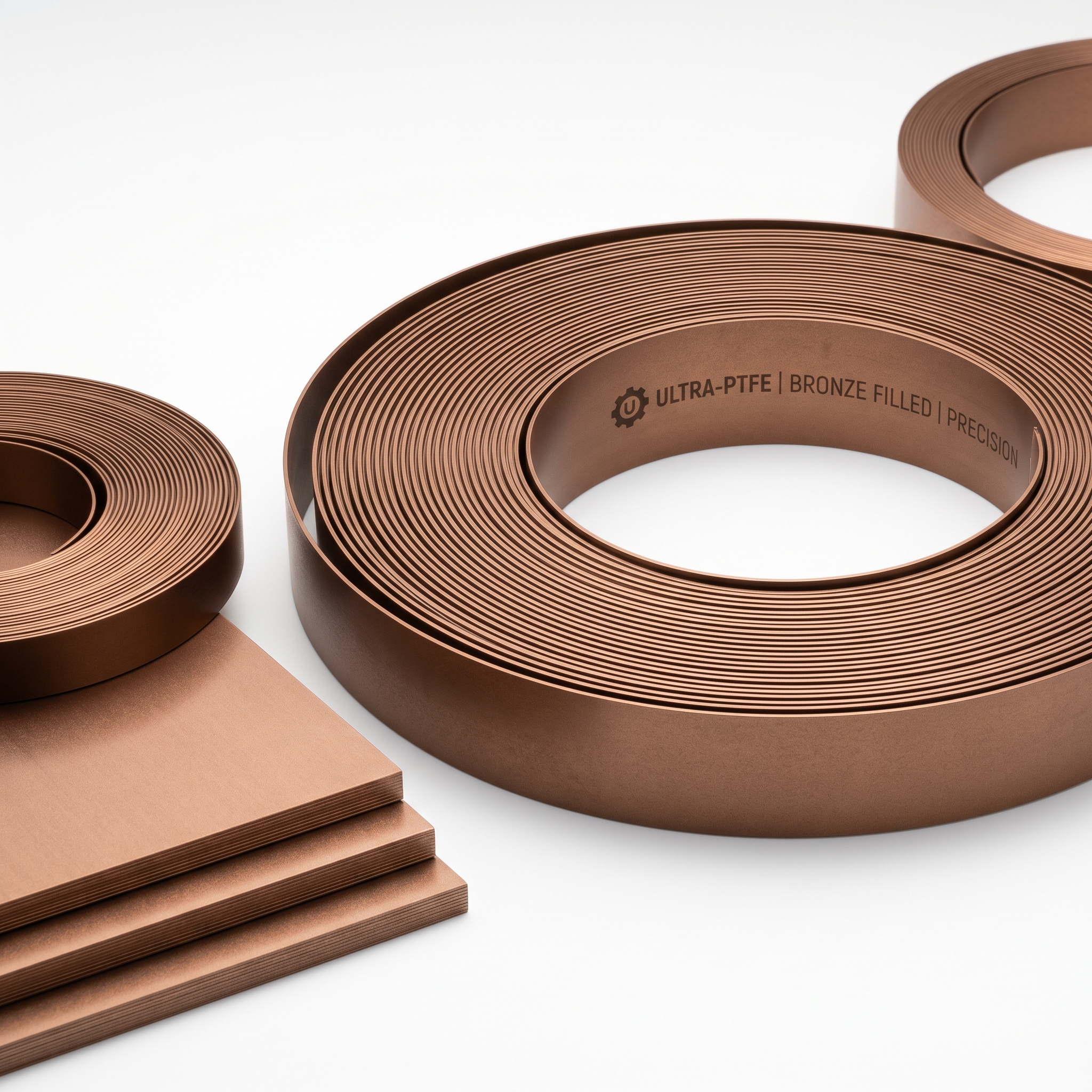
PTFE

Polytetrafluoroethylene — The Universal Sealing Material

Temperature Range: −200°C to +260°C

PTFE (polytetrafluoroethylene) is often called the universal sealing material because it resists virtually every known chemical, operates across the widest temperature range of any elastomer-related material, and has the lowest coefficient of friction of any solid. It is essential in chemical, food, medical, and ultra-high-purity applications.

Universal Chemical Resistance Extremely Low Friction Wide Temperature Range FDA Food & Medical Grade Non-Stick Properties
Applications
  • Chemical Industry
  • Food & Beverage
  • Medical & Pharmaceutical
  • Semiconductor
  • Cryogenic Systems
Products Available
  • PTFE Rods
  • PTFE Sheets
  • PTFE Gaskets
  • PTFE Bushes
  • PTFE O-Rings
Common Questions
Can PTFE handle all chemicals?+
PTFE resists almost all chemicals including strong acids, bases, solvents, and oxidisers. The only exceptions are molten alkali metals, fluorine gas at high temperatures, and certain fluorinated compounds. It is the broadest chemical resistance available in any sealing material.
Is PTFE suitable for dynamic sealing applications?+
Yes. PTFE's extremely low friction coefficient makes it ideal for dynamic seals, slide bearings, and guides. Virgin PTFE is used for static applications, while glass-filled or carbon-filled grades are recommended for dynamic wear environments.
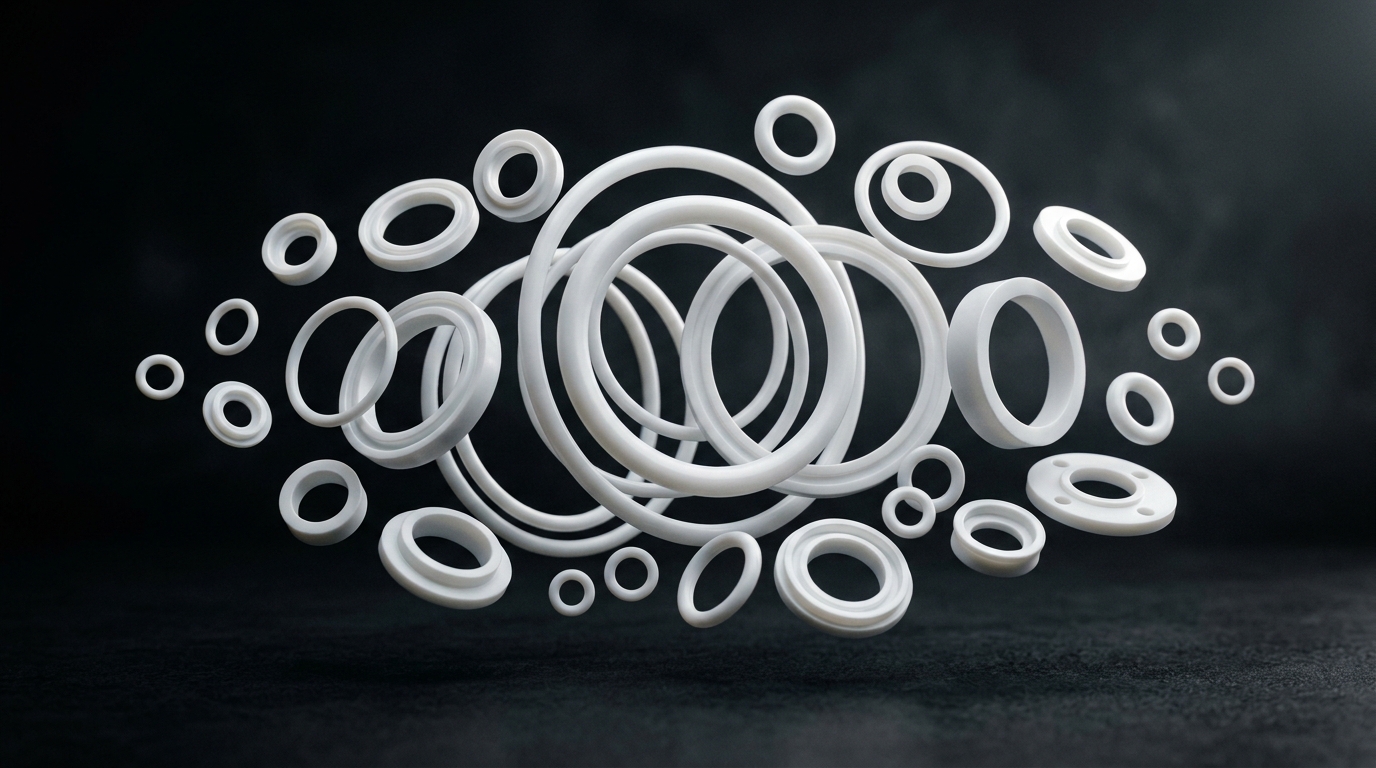
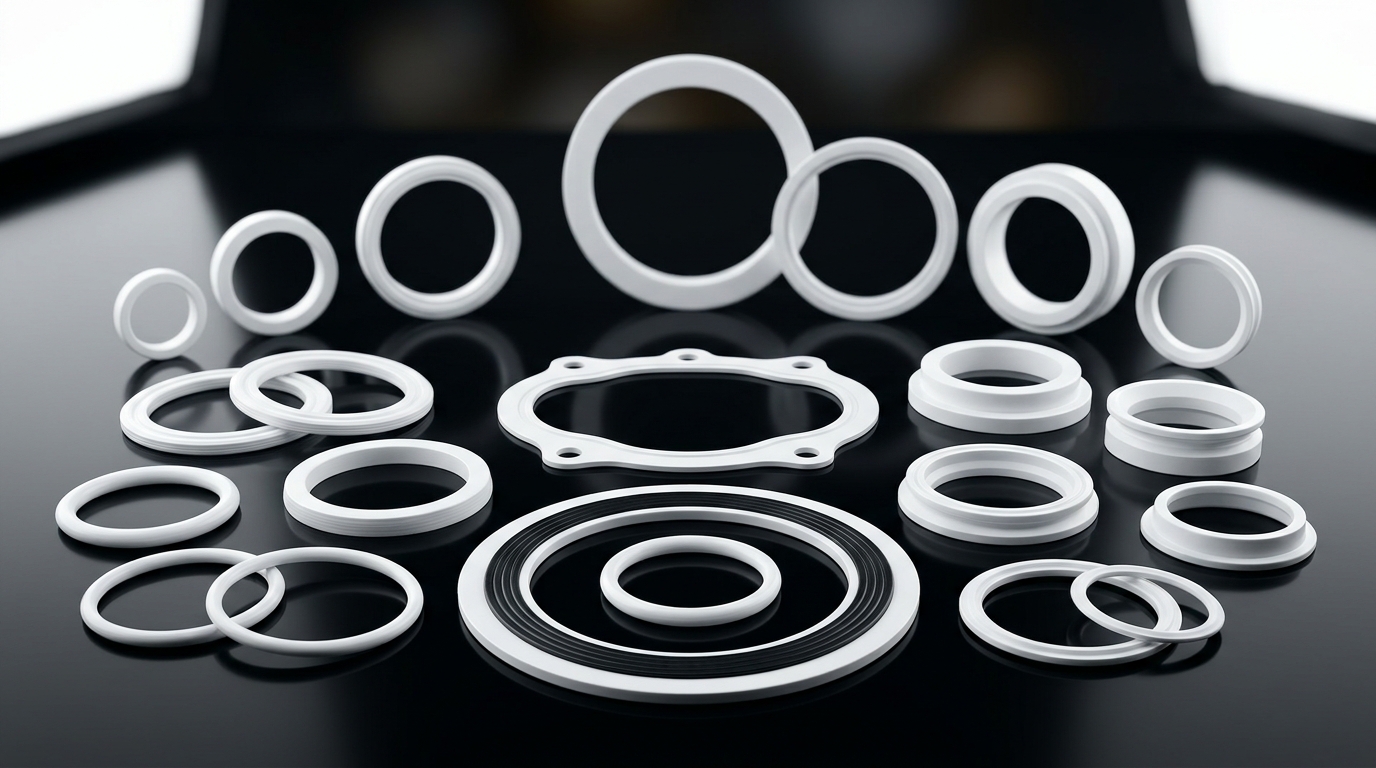
PTFE Seals O-Rings and Gaskets
PTFE White / Virgin
PTFE O-Rings
PTFE Rods and Sheets
Quick Reference

Material Comparison Chart

Compare key properties across all material grades at a glance.

Material Oil Resistance Heat Resistance Chemical Resistance Water / Steam Food Grade Wear Resistance
NBR
⭐⭐⭐⭐⭐⭐⭐⭐⭐⭐⭐⭐⭐ ⭐⭐⭐⭐
Silicone
⭐⭐⭐⭐⭐⭐⭐⭐⭐⭐⭐⭐⭐⭐ ⭐⭐⭐
Viton (FKM)
⭐⭐⭐⭐⭐⭐⭐⭐⭐⭐⭐⭐⭐⭐⭐⭐⭐⭐ ⭐⭐⭐⭐
EPDM
⭐⭐⭐⭐⭐⭐⭐⭐⭐⭐⭐⭐⭐ ⭐⭐⭐
Neoprene
⭐⭐⭐⭐⭐⭐⭐⭐⭐⭐⭐⭐ ⭐⭐⭐
Natural Rubber
⭐⭐⭐⭐⭐⭐⭐ ⭐⭐⭐⭐⭐
Polyurethane
⭐⭐⭐⭐⭐⭐⭐⭐⭐⭐⭐ ⭐⭐⭐⭐⭐
PTFE
⭐⭐⭐⭐⭐⭐⭐⭐⭐⭐⭐⭐⭐⭐⭐⭐⭐⭐⭐⭐ ⭐⭐⭐⭐⭐
Decision Tool

Which Material Do You Need?

Match your operating condition to the recommended material grade.

Need Oil &
Fuel Resistance?
Choose NBR
Need High
Temperature?
Silicone / Viton
Need Chemical
Resistance?
Choose PTFE
Need Outdoor /
Water Resistance?
Choose EPDM
Need High Wear
Resistance?
Choose PU
Industries We Serve

Materials for Every Industry

Automotive Industry
Automotive
NBR · Viton · Silicone
Hydraulic Systems
Hydraulic &
Pneumatic
NBR · PU · PTFE
Chemical Industry
Chemical Plants
Viton · PTFE · EPDM
Food and Pharma
Food & Pharma
Silicone · PTFE · EPDM
Water Treatment
Water Treatment
EPDM · Natural Rubber
Construction
Construction
EPDM · Neoprene · NR
Mining
Mining
Natural Rubber · PU · PTFE
Steel Industry
Steel & Heavy
Engineering
Viton · NBR · PU
Why SCIS

Why Choose Our Materials

Every material we supply is selected, tested, and backed by technical expertise.

Premium Raw Materials
All materials are sourced from verified manufacturers meeting international quality standards and grading specifications.
Quality Tested
Each batch undergoes hardness, tensile strength, and dimensional inspection to ensure consistency in every delivery.
Industrial Grade
We supply genuine industrial-grade materials — not commercial-grade substitutes — for long-term, reliable performance.
Long Service Life
Correctly specified materials deliver significantly longer service intervals, reducing downtime and total cost of ownership.
Wide Material Options
8+ rubber and engineering material grades available from stock, covering the full range of industrial sealing and mechanical applications.
Technical Guidance
Our experienced team provides material selection guidance based on your operating temperature, media, pressure, and application requirements.
FAQ

Frequently Asked
Questions

Answers to the most common questions about industrial rubber materials, selection, and specifications.

Still Have Questions?

Our technical team is available to help you choose the exact material for your application. Contact us with your operating conditions for a recommendation.

Ask Our Experts
Which material is best for hydraulic oil?+
NBR (Nitrile Rubber) is the most common choice for hydraulic oil applications due to its excellent oil resistance and cost-effectiveness. For higher temperatures or more demanding conditions, Viton (FKM) is the preferred upgrade. PTFE is used when chemical compatibility across multiple fluid types is required.
What is the difference between NBR and Viton?+
NBR handles petroleum oils and fuels well at moderate temperatures (up to 120°C) at a lower cost. Viton operates at much higher temperatures (up to 250°C), resists a far wider range of aggressive chemicals, and offers superior long-term sealing performance, making it the premium choice for demanding environments.
Is Silicone food-grade safe?+
Yes. Food-grade silicone is non-toxic, odourless, tasteless, and meets FDA and European food contact standards. It is widely used in food processing, dairy, beverage, and pharmaceutical equipment where direct product contact is required.
Can PTFE handle all chemicals?+
PTFE resists virtually all known chemicals, including strong acids, bases, solvents, and oxidisers. The only exceptions are molten alkali metals, elemental fluorine at high temperatures, and certain perfluorinated compounds. PTFE is the broadest-spectrum chemical-resistant sealing material available.
Which material is best for outdoor applications?+
EPDM is the first choice for outdoor applications because of its excellent resistance to UV, ozone, and weathering. Neoprene is also a good option for general outdoor and marine environments, especially when moderate oil resistance is also needed.
How do I choose the correct material for my application?+
The key factors are: operating temperature range, type of fluids or chemicals in contact, pressure conditions, dynamic or static application, food/medical compliance requirements, and environment (outdoor, UV, steam, water). Our technical team can guide you through selection based on these parameters — simply contact us with your application details.